

Katrina Hurricane Disaster Relief


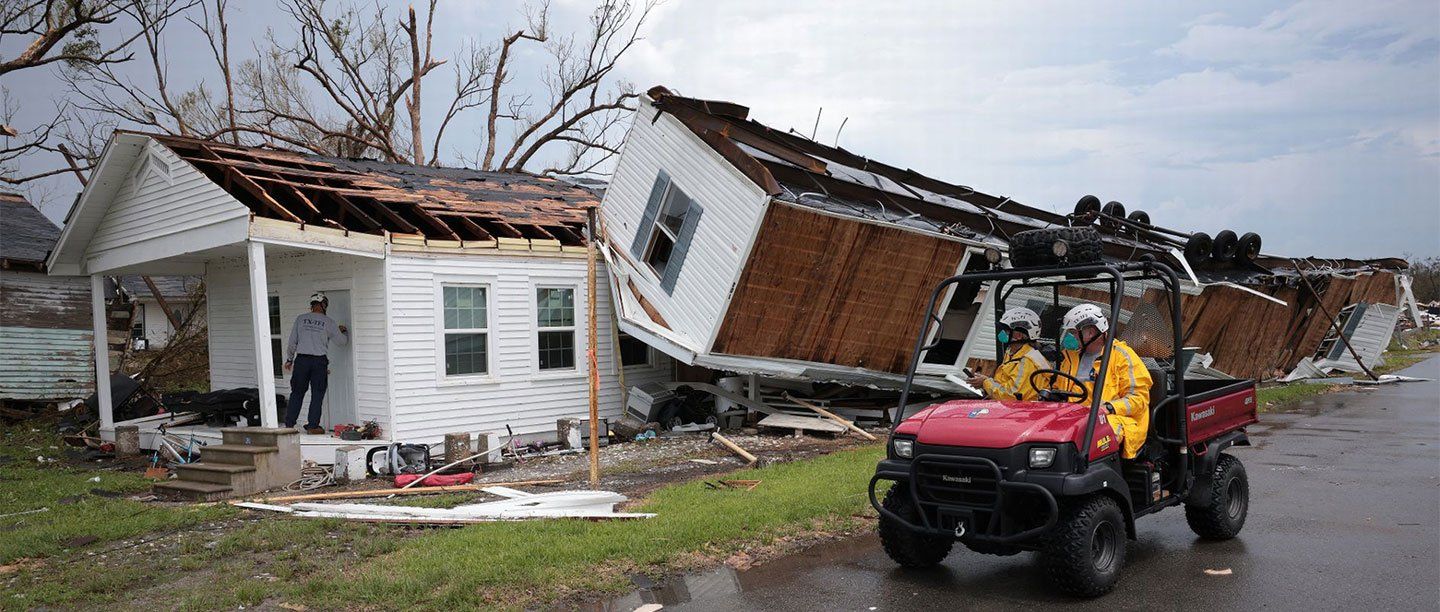
Work teams sponsored by the Disaster Committee of the USA Committee spent January through March of 2006 and 2007 helping to rebuild in Biloxi, Mississippi after Hurricane Katrina left a huge area of devastation. It was a true blessing for all who had the opportunity to serve.

Work Team Photos.  Click Here

Following are some of the frequently asked questions about the project.

1. How was it organized?

A group of four brothers (Jerome Witzig, Arnold Gerst, Max Hoerr and Ron Hodel) traveled to the gulf coast during Oct 2005 (approximately 6 weeks after Katrina hit) to assess the situation and determine how ACWR might help. The initial focus was East Biloxi, MS and the first contact was with Bishop Bruce Nelson, pastor of the Lighthouse Apostolic church. They learned of Bishop Nelson through the Midwest Food Bank which had taken many semi loads of food and clothing to the area.

Through talking with many people and organizations, and surveying other areas of devastation, they felt God was leading them to the East Biloxi, MS area. It is an area that, before the storm, was very poor with a lot of crime and drugs present. Bishop Nelson, along with others, has worked very hard to assure that the crime and drug presence does not return.


2. Who were the coordinators?


2006

2007

Project

Ron & Donna Hodel

Ron & Donna Hodel

Construction

Curt & Luann Kaeb

Curt & Luann Kaeb

Hospitality

Steve & Bonnie Kaeb

Steve & Sandy Schutte


Harold & Sherrie Fritz

John & Patsy Stoller


Harvey & Margaret Walter

Ray & Gladys Slagel


3. How many participated each year?


2006

2007

Project length

13 weeks

14 weeks

Number of individuals

655

650

Number of total project spots filled

804

856

Number of Churches individuals from

59

64

Ave work team size per week

62

61

The age distribution of individuals for 2007 points out that one of the benefits is allowing our young adults to work side-by-side with older skilled folks.

14-20 yrs old

19%

51-60 yrs old

21%

21-30 yrs old

13%

61-70 yrs old

15%

31-40 yrs old

4%

71-80 yrs old

4%

41-50 yrs old

15%

no age given

6%


4. What was the experience of the work teams?

Ages ranged from 14 to 80+ and skills ranged from novice to craftsman. All trades except the HVAC installation were performed by our work teams. Many ended up doing work they had never done before making it a great learning experience.


5. Any testimonials that would be of interest?

From the people living on the gulf coast the most common expression was "We could never have rebuilt without the faith based groups helping!" Standing in line at the lumber and hardware stores, people also in line would see our name tags and thank us. People with responsibility of managing volunteers looked at us as the "model" volunteer group from the way the work teams conducted themselves, their quality of work and their work ethic, especially from the young folks. Our teams were often referred to as "angels."


6. What were the spiritual rewards the work teams experienced?

Devotions, scripture memorization, church, conversions of some of our work team members, ability to share with the home owners, sharing a meal and short song service with seniors on a Friday noon. Also, we were able to share a meal with a recovery group meeting at the church.


7. Where did they stay?

The teams stayed at the Cedar Lake Assembly Church. The church also hosts a preschool to 8th grade in their facility. We had the use of the church, the kitchen and the dining room as well as a storage area for our building materials. ACWR built a shower trailer for use by the teams.

During our first visit, we were at city hall speaking with some officials and asked if anyone knew of somewhere 60 people could stay and that also had facilities for cooking. A secretary over-heard our conversation, apologized for listening and then suggested Cedar Lake. God's hand for sure.


8. How were meals provided?

We had a couple each month responsible for buying food and preparing meals. We ate breakfast and dinner at the church and brown bag lunches at the job site at noon. Costs of meals averaged $1.36 in 2006 and $1.80 in 2007, the difference being that there was more donated food available in 2006.


9. How many homes built, repaired, etc. each year?


2006

2007

New Homes

4

3

Major Repairs

14

11

Minor Repairs

21

11


10. Who were homes built for? How was this decided?

Our primary focus was on elderly and then folks that for one reason or another had few resources to rebuild. We asked three churches to "pre-screen" candidates based on our criteria. The candidate then filled out financial statements which we reviewed. Finally, we interviewed the candidates and assessed their property before agreeing to help. It was not a criteria that they attend either of the churches or church at all. This gave us an opportunity to witness to those that did not know Jesus. The churches that helped us were the Lighthouse Apostolic Church, Cedar Lake Assembly and the Bible Fellowship Church.


11. What was the response of the recipients?

Most could not believe we would help them when they had no resources to put toward the effort. Also, it was hard for them to comprehend why someone would take vacation time to come down and help someone they didn't even know.


12. How much money was donated for these projects?


2006

2007

Approximate net investment

$400,000

$450,000


13. Any other interesting information.

New home construction was more in 2007 for two main reasons. In 2006 we shipped new home materials from Bloomington IL via Midwest Food Bank. The materials were purchase at contractor costs or lumber yard costs. In 2007 all materials were purchased in MS. Also, the homes in 2007 were built on piers from 3 to 10 feet above ground which added considerably to the cost.


2006

2007

Cost per sq ft of new construction

$33.58

$37.15

With the large number of churches involved, it was a great opportunity for different church members to relate to each other. There were many middle-age people on the teams that had never been on a work team before. Being in the states provided an opportunity for those that prefer not to travel internationally.

Biloxi, Mississippi Work Team Photos.  Click Here